85% Recall on Current Affairs
EdMe AI’s Ultra Predictions just got its first live exam result.
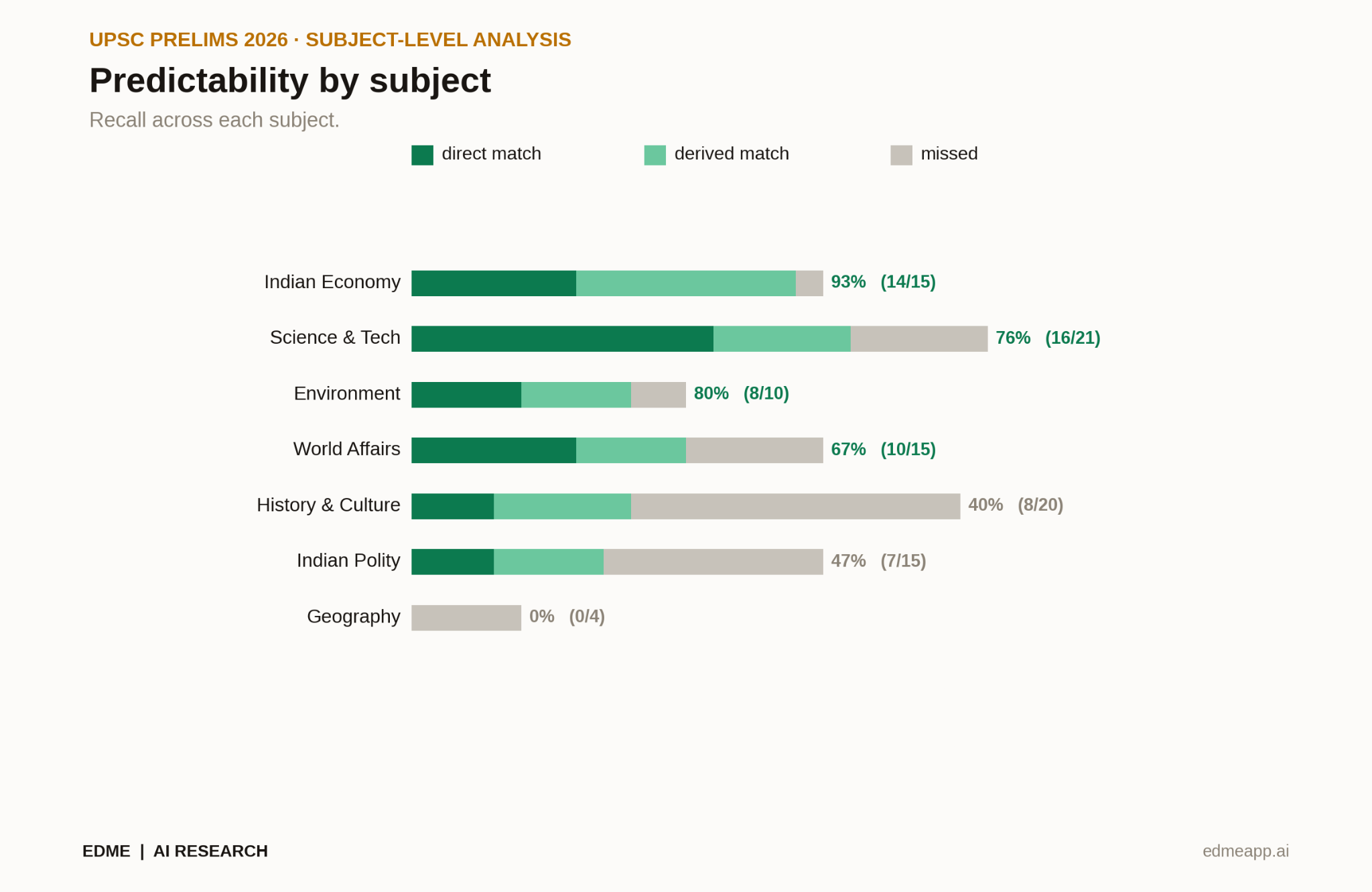
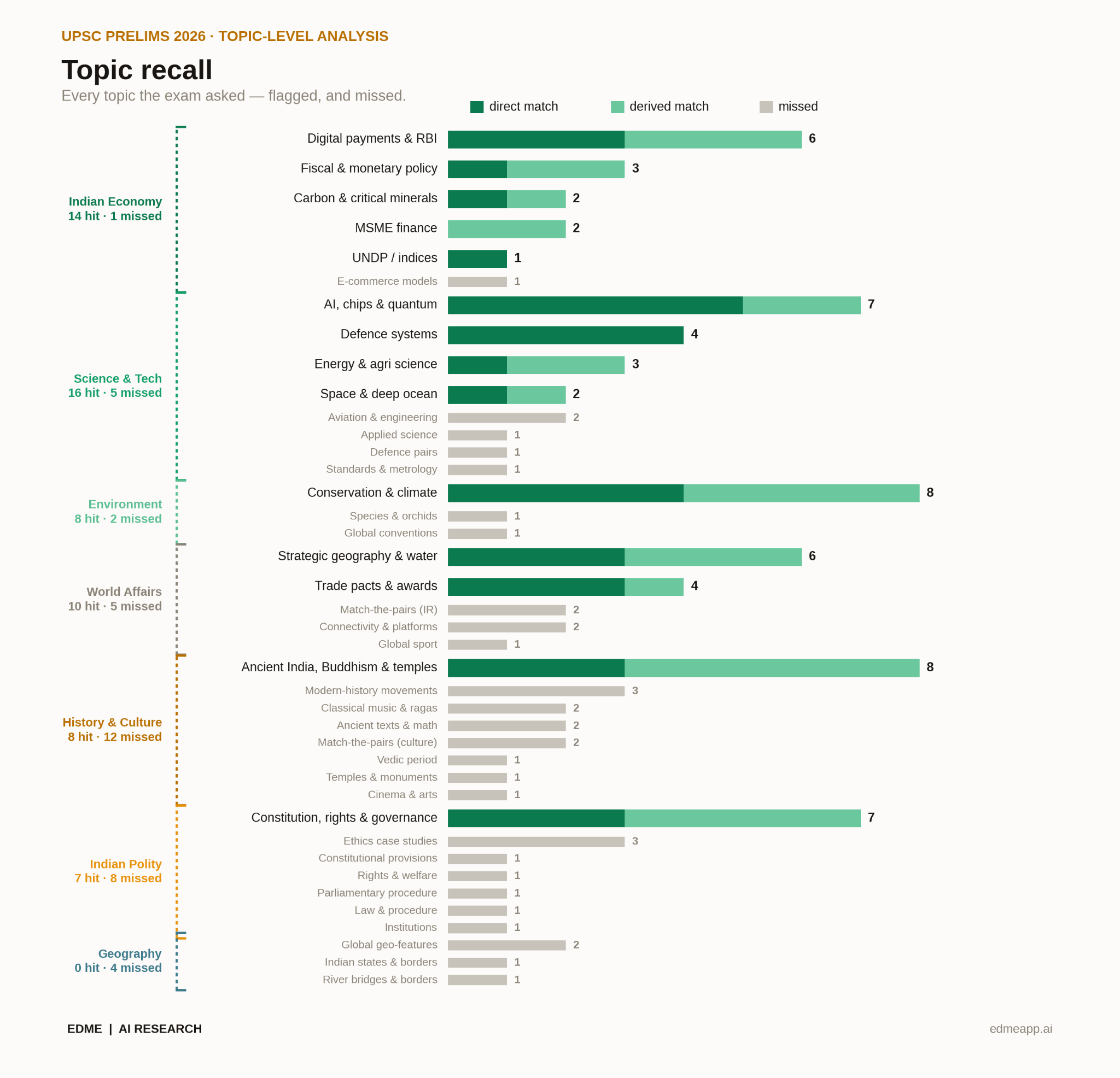
Out of 74 current-affairs-linked questions in GS Paper 1, 63 question topics were covered in the Ultra Predictions module. That is 85% recall.
In being transparent, the full module was published a day before the Prelims 2026 exam (on May 23, 2026) on Telegram.
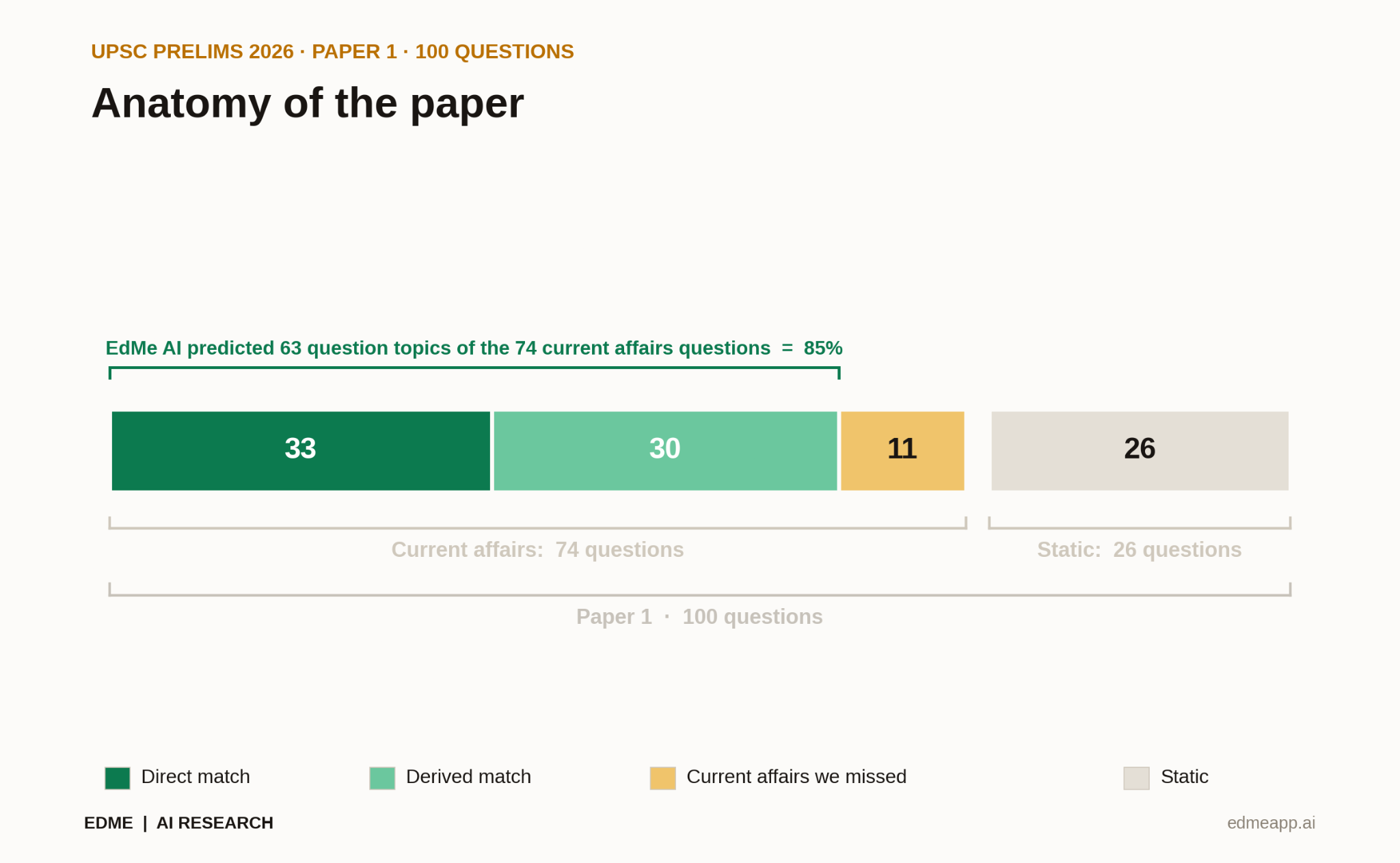
Direct matches are questions we predicted word-for-word - exactly the topic we flagged.
Derived matches are questions we didn’t predict word-for-word, but that fall within a topic we flagged - so if you studied it, you’d have covered them.
The Problem: Everyone Studies. Nobody Knows What Matters.
5.49 lakh candidates appeared for Prelims 2026 exam. Most of them spent months reading. Thousands of pages of current affairs. Dozens of coaching institute lists. And still walked out uncertain. Yes, this year’s Prelims was tough and abstract.
The conventional approach to current affairs preparation has always been: read everything and hope the right topics show up.
But Prelims 2026 also confirmed - UPSC current affairs questions may be tough but are not random. They follow patterns. Specific patterns. Specific enough that a trained model, working from 13 years of news data and PYQs, can identify them months in advance.
What appeared from our Predictions list
The Science and Technology & Economy section was highly current-affairs driven. Even Polity went beyond standard Articles and tested governance structures (and Ethics-related situations) that have been in the news cycle for the past 18 months.
Some examples of confirmed topic hits from GS Paper 1:
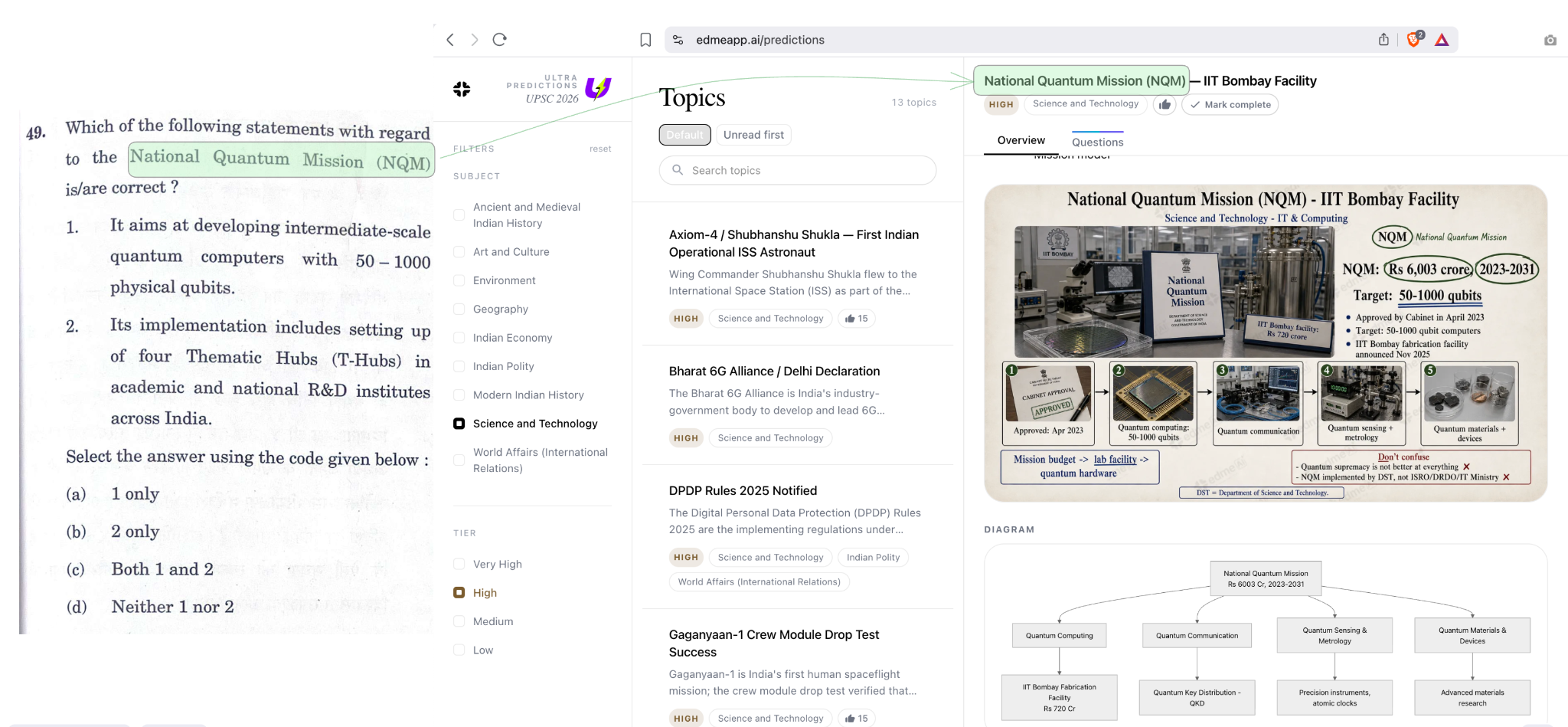
- National Quantum Mission: physical qubit targets, T-Hub structure
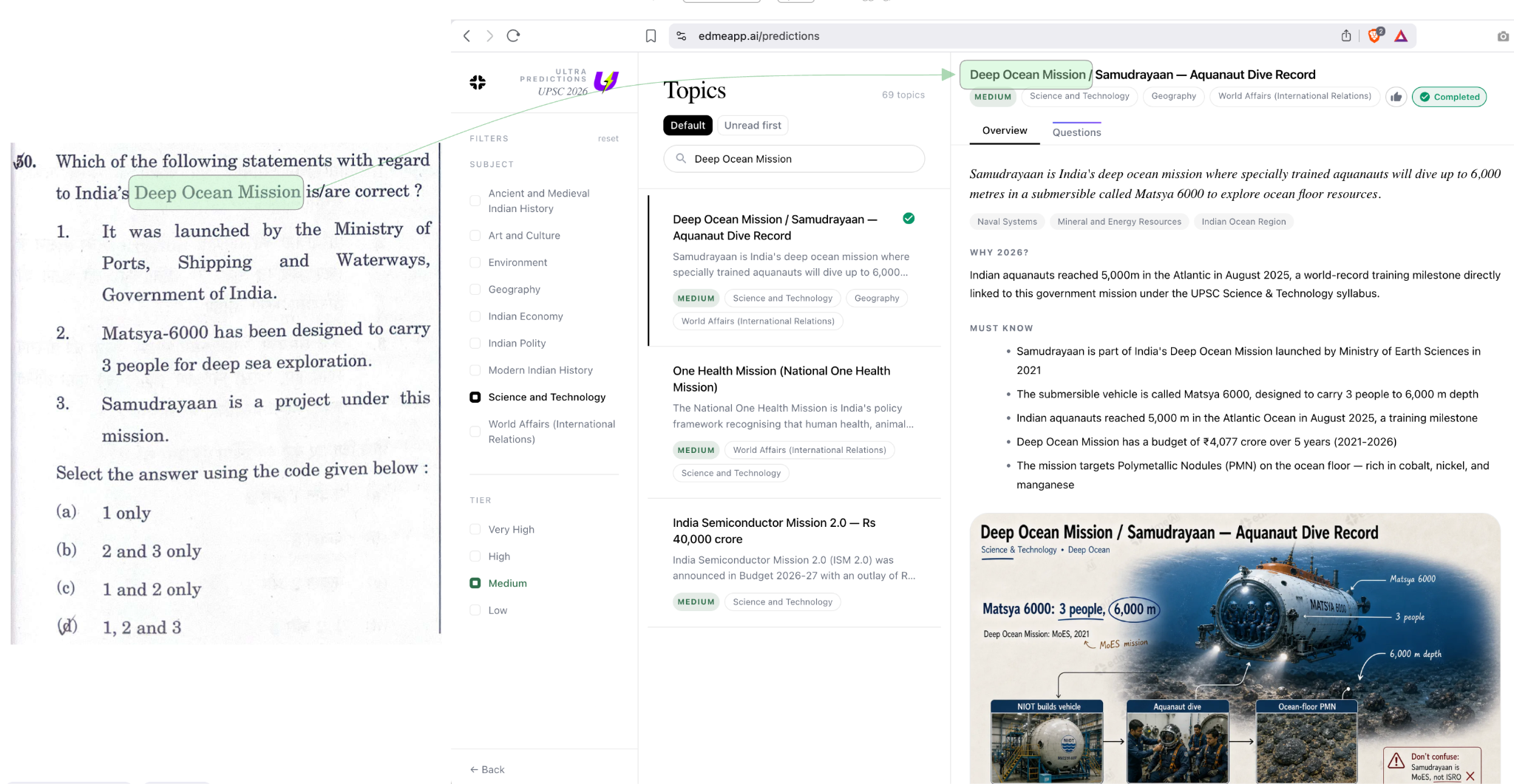
- Deep Ocean Mission: Matsya-6000, Samudrayaan project framework
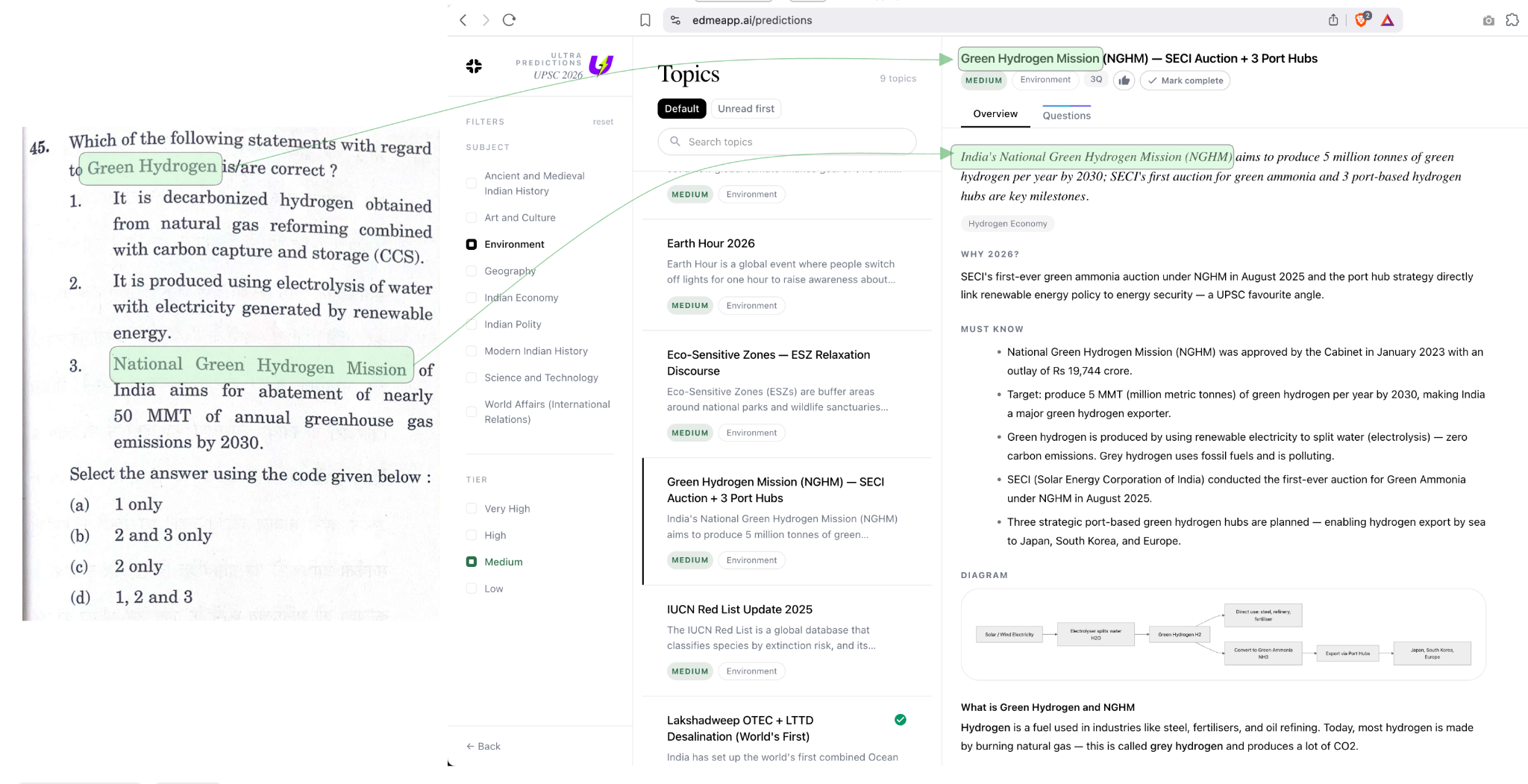
- Green Hydrogen: electrolysis process, NGHM abatement targets
- Stealth Aviation Technology
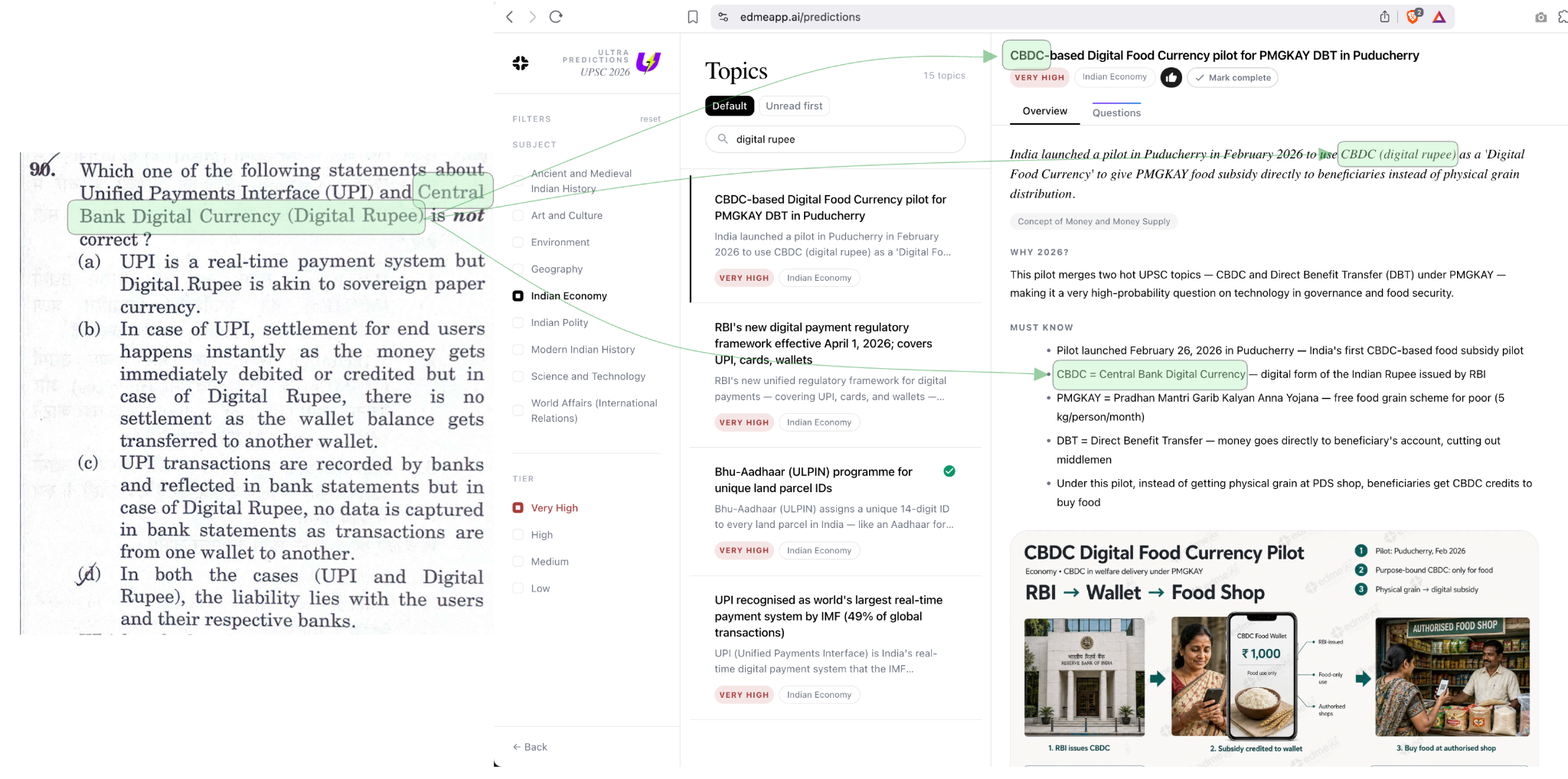
- UPI and Digital Rupee: CBDC architecture and payments
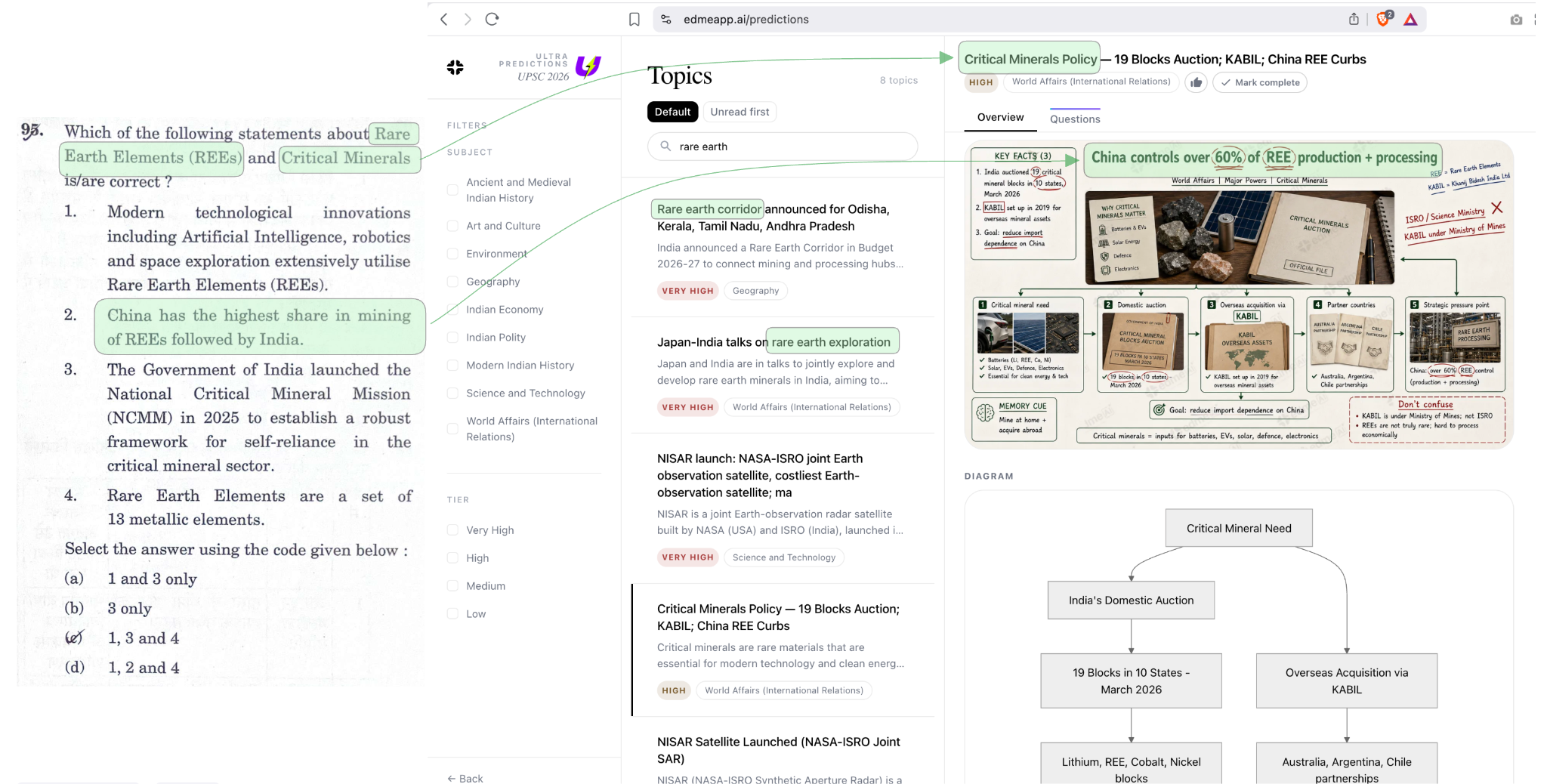
- Rare Earth Elements: India’s mineral strategy and blocks
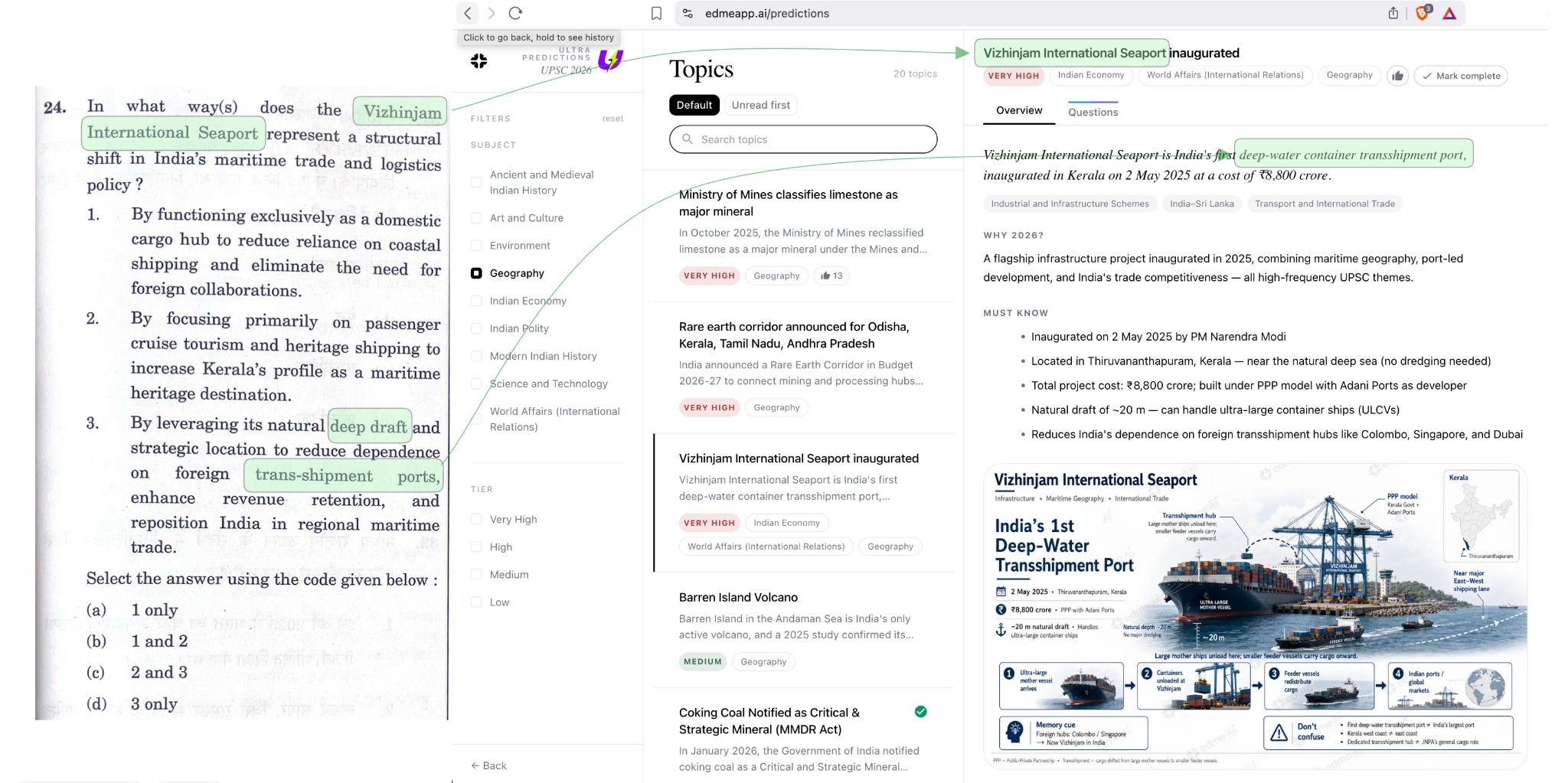
- Vizhinjam Port
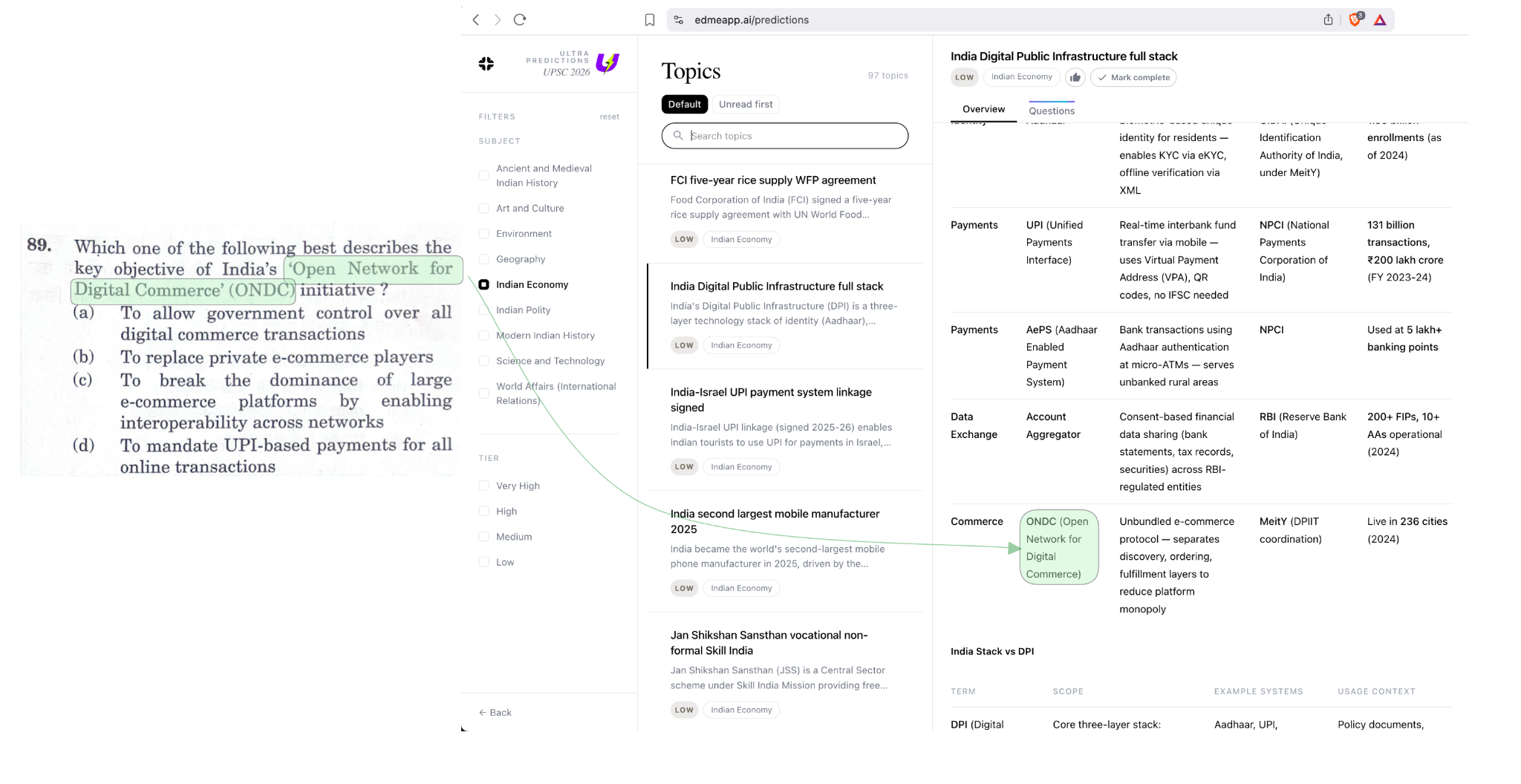
- Open Network for Digital Commerce (ONDC)
- Drone swarms and defence applications
Every one of these was flagged in the Ultra Predictions module 3 weeks before the exam.
How We Measure This
The 85% figure covers current-affairs-linked questions specifically. These are the questions tied to institutional developments, government missions, policy frameworks, and named schemes - the portion of the paper that moves every year based on what happened in the news cycle.
The remaining 26 questions came from static knowledge: ancient history, medieval dynasties, classical music raga equivalents, Nagara-style temple architecture, Jain philosophical categories. Our system does not predict these, and we have never claimed it does. No news-based model can. We are transparent about that.
The calculation is the same one we have used across six years of backtesting. For reference - read our earlier blog on how we built this.
Where is the set of actual exam topics and is the set of predicted topics in the Ultra module. No hindsight. No adjustment after the fact. The predictions were locked on May 23.
The Six-Year Picture - Overall
The overall accuracy (including static and current affairs questions) is 63%.
| Year | Recall |
|---|---|
| 2020 | 60.7% |
| 2021 | 60.3% |
| 2022 | 59.3% |
| 2023 | 64.5% |
| 2024 | 64.6% |
| 2025 | 66.3% |
| 2026 Ultra (total) | 63% |
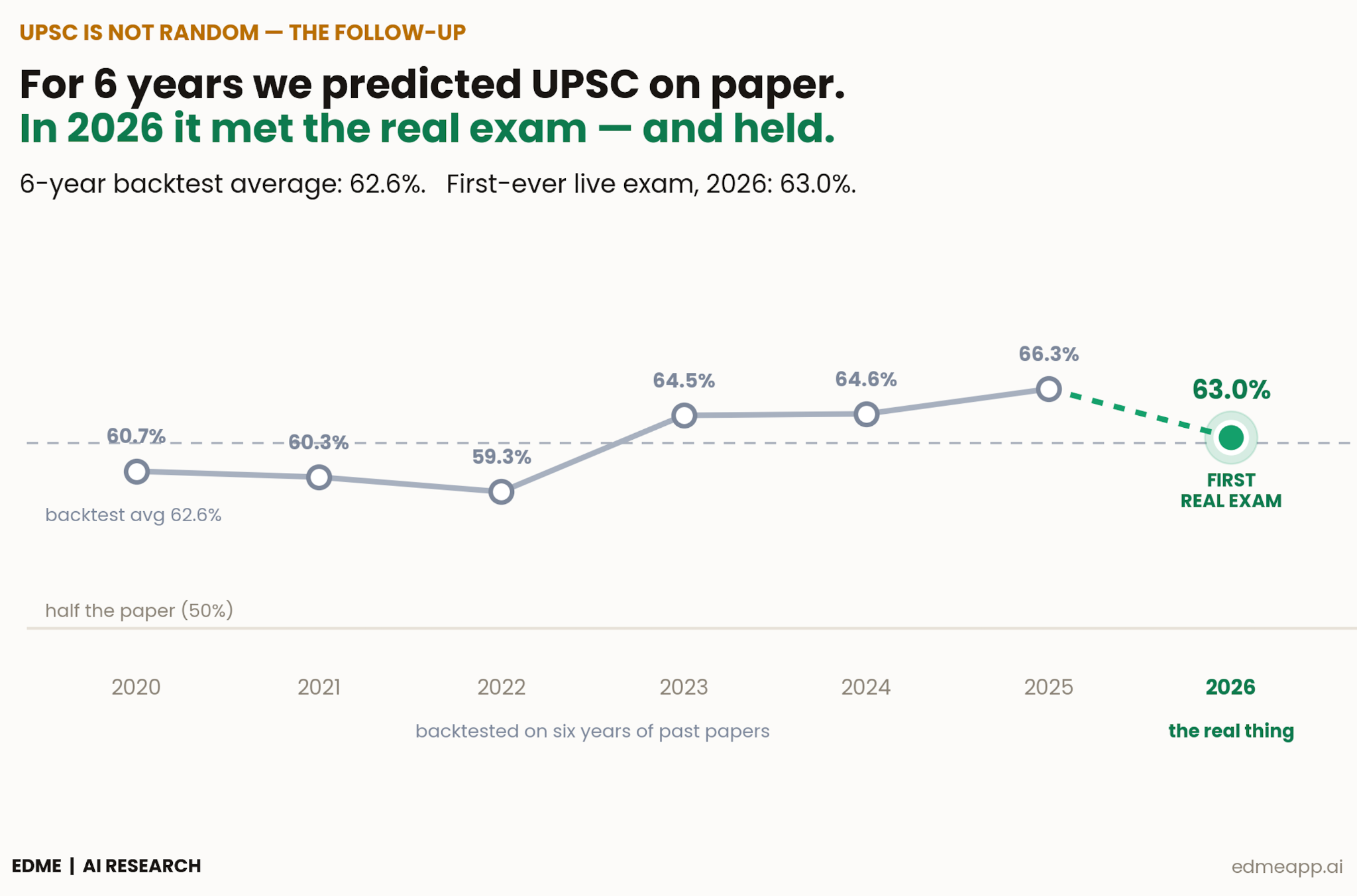
The 2026 Ultra module is a focused layer built specifically on top of the base model, trained to maximize coverage of current-affairs-linked questions. Prelims 2026 was its first live test.
What This Means for How You Prepare
The data points toward one conclusion. Time spent on current affairs is not the problem. Direction is the problem.
The average aspirant spends months reading general news, coaching institute compilations, and broad current affairs magazines, hoping the right topics appear. The model shows that this is not how UPSC constructs its paper.
UPSC current-affairs questions cluster around a specific category of events: government missions, statutory body notifications, treaty ratifications, Supreme Court judgments on institutional questions, and named policy schemes. The model finds these. General news reading mostly does not.
Focus over breadth. The Ultra module gives you only 352 ranked topics. The paper confirmed 63 of 74 current-affairs topics were on that list.
Signal over noise. The paper was heavy on Science and Technology missions, economic policy frameworks, and governance structures - exactly the category the model is trained to surface.
Efficiency over volume. 63 topics covered out of 74. That is the return on studying the right list.
An Honest Note
EdMe Ultra Predictions are strong directional signals, not guarantees. UPSC rewards deep understanding, not topic coverage alone. What this module does is try its best to remove the noise so your preparation time can focus only on what matters for the UPSC exam.
For UPSC 2026 Mains, UPSC 2027
The Predictions module for 2026 Mains is already being built, to be released mid-June, 2026.
To see in detail real question paper (All Sets - A, B, C, & D), and which all question topics predicted in detail - see edmeapp.ai/paper
Some Examples: Confirmed Hits